Recommended Reading: Exploring Identity, Self-Empowerment, and the Impact of Family Separation
Books have the power to educate, validate lived experience, and support personal reclamation. Whether you are seeking personal insight, historical context, or empowerment through storytelling, these recommended readings offer meaningful perspectives on identity formation, family separation, and personal growth. This collection is shared as part of our community resources, reflecting a range of voices and experiences.
Memoirs
Memoirs offer firsthand accounts of lived experience, illuminating the long-term impact of separation from one’s origins. These narratives explore themes of loss, discovery, identity, and resilience, offering opportunities for recognition, reflection, and connection for readers navigating similar paths. This selection is shared as part of our community resources.


I Would Meet You Anywhere: A Memoir (Machete) – Susan Kiyo Ito


Ithaka: A Daughter's Memoir of Being Found – Sarah Saffian
Goodbye Again – Candace Cahill


Somebody’s Daughter – Zara H. Phillips
Two Peas In A Separated Pod: A True Story of Adoption – Jeannie Lachman


You Don't Look Adopted – Anne Heffron
The Truth So Far...: a detective's journey to reunite with her birth family – Ms Jennifer Dyan Ghoston


Dear Stephen Michael's Mother: A Memoir – Kevin Barhydt

Born with Teeth – Kate Mulgrew

Twice Born: Memoirs of an Adopted Daughter – Betty Jean Lufton

Colored Threads: Memoir of an Adoptee – Daniel Stedfast

American Bastard – Jan Beatty
Lions Roaring Far From Home: An Anthology by Ethiopian Adoptees – Aselefech Evans, Kassaye Berhanu-MacDonald, Maureen McCauley


I Must Have Wandered: An Adopted Air Force Daughter Recalls – Mary Ellen Gambutti


Invisible Boy: A Memoir of Self-Discovery (Truth to Power) – Caroline Clarke

The Gathering Place: An Adoptee's Story – Emma Stevens

Choosing to Breathe – Emma Stevens

A Fire is Coming – Emma Stevens
Non-Fiction & Historical Perspectives
Understanding the systemic nature of family separation, displacement, and identity erasure helps contextualize individual experience. These dynamics are not isolated; they are shaped by historical, political, and institutional structures that continue to influence lives today. This selection is shared as part of our community resources to support deeper understanding and critical reflection.


The Child Catchers: Rescue, Trafficking, and the New Gospel of Adoption – Janine Myung Ja, Rare Adoption Books, Janine Vance


Who Is a Worthy Mother?: An Intimate History of Adoption – Rebecca Wellington
Before and After: The Incredible Real-Life Stories of Orphans Who Survived the Tennessee Children's Home Society – Judy Christie, Lisa Wingate


Adoption: What You Should Know (An Orphan's Research) – Janine Myung Ja, Rare Adoption Books, Janine Vance

American Baby: A Mother, a Child, and the Shadow History of Adoption – Gabrielle Glaser

The Baby Scoop Era: Unwed Mothers, Infant Adoption and Forced Surrender – Karen Wilson-Buterbaugh
Fiction
Fiction can serve as a powerful lens for exploring the emotional and psychological dimensions of family separation and origin loss. Through storytelling, readers may encounter familiar themes, reflect on complex emotions, and find resonance in imagined experiences that echo lived realities. This selection is shared as part of our community resources, offering space for reflection and meaning-making.

Sold on a Monday: A Novel – Kristina McMorris
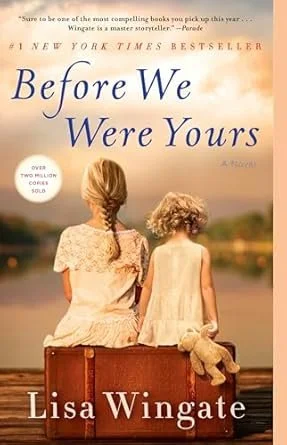
Before We Were Yours: A Novel – Lisa Wingate

Orphan Train: A Novel – Lisa Wingate
Click the affiliated link(s) to make a purchase. A portion of the proceeds supports our scholarship fund.
Enjoyed a book from our list? You may consider supporting the author by leaving a review on Amazon.
Help Us Grow Our Recommended Reading List
We aim to curate a diverse and thoughtful collection of books shared as part of our community resources, reflecting self-empowerment, identity exploration, and the lived realities of family separation. If a book has been meaningful to you and feels aligned with this space, we welcome your recommendation.
Community input helps ensure this reading list reflects a wide range of voices and perspectives. You’re invited to email your book suggestions as we continue building a shared resource that supports reflection, learning, and connection within our peer support spaces.